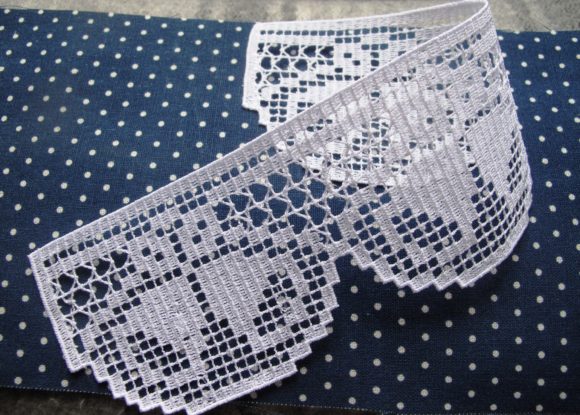
Review: FSL Christmas Bells Lace for Business Merch
As an embroidery designer who has spent years digitizing and testing files for small business clients, I approach every new machine embroidery design with a critical eye. It is not just about whether the design looks pretty on a screen; it is about how it performs in the real world of branded merchandise. Recently, I evaluated FSL Christmas Bells Lace, a free-standing lace border featuring intricate bell motifs that mimic the delicate appearance of crochet filet lace. For boutique owners, Etsy sellers, and creative studios looking to elevate their holiday offerings, this design presents a unique opportunity to blend traditional craftsmanship with modern branding.
First Impressions: Elegance Meets Handmade Charm
The immediate visual impact of FSL Christmas Bells Lace is one of refined elegance. Unlike bold, blocky logos often used for corporate uniforms, this design carries a soft, decorative weight. It feels premium and handmade, which is exactly what customers seek when purchasing from independent brands. The filet lace aesthetic suggests a level of care and attention to detail that can significantly enhance the perceived value of any finished product. For a bakery, florist, or high-end boutique, this design does not just decorate an item; it communicates a brand identity rooted in quality and tradition.
However, because it mimics lace, the design relies heavily on negative space and fine connections. This makes it visually light but technically demanding. It is not a "throw-and-go" file. It requires a thoughtful approach to fabric selection and stabilization to ensure the delicate bells do not get lost in the texture of the material.
Strategic Applications for Small Business Merch
When considering how to integrate this digital embroidery file into your product line, think beyond standard holiday decor. While the description notes its common use on towels, napkins, and pillows, its potential for small business merch is vast if applied correctly.
- Branded Patches: This is perhaps the most versatile application. By embroidering the lace border on water-soluble stabilizer and trimming it carefully, you create a standalone embroidered patch. These can be sewn onto tote bags, denim jackets, or canvas aprons. A café could use these as seasonal accents on staff uniforms, adding a touch of festive warmth without overwhelming the brand logo.
- Apron Embroidery: For culinary businesses, an apron is a walking billboard. Placing this lace border along the hem or pocket edge of a high-quality linen apron creates a sophisticated look. It signals to customers that the brand values aesthetics as much as flavor.
- Tote Bag Design: Canvas totes are staples for retail shops. Using the lace border as a framing element around a central logo or as a standalone decorative strip near the handle adds a custom, artisanal feel that mass-produced bags lack.
- Cap Embroidery: While challenging, using a smaller scale of this design on the side panel of a structured cap can serve as a subtle accent. It works best for brands that want to appear playful yet elegant, such as a pet boutique or a creative studio.
Navigating Technical Challenges in Commercial Embroidery
Free-standing lace (FSL) is notoriously tricky. Because there is no fabric backing the stitches, the structural integrity of the design depends entirely on the thread tension and the quality of the stabilizer. When reviewing FSL Christmas Bells Lace for commercial use, several technical factors must be addressed to avoid costly errors.
First, consider the hoop size and the scale of the design. If you intend to use this as a small chest accent or a tiny label, the fine details of the crochet-like pattern may merge together, losing definition. Always test the design at the exact size you plan to produce. If the bells become indistinct blobs, the design is too small for that application. Conversely, if scaled up too large without adjusting density, the lace may sag or lose its shape.
Fabric texture also plays a crucial role. This design shines on smooth, stable surfaces. Avoid using it on highly textured fabrics like thick wool or loose-weave knits unless it is being created as a separate patch. The contrast between the delicate lace and a rough fabric can make the embroidery look messy rather than intentional. For custom apparel, stick to tight-weave cottons, linens, or polished synthetics.
Another critical consideration is durability. Items like aprons and tote bags undergo frequent washing. Free-standing lace, while beautiful, can be more fragile than traditional satin-stitch embroidery. Ensure that your clients understand the care instructions. Reinforcing the edges with a narrow zigzag or ensuring the lace is securely tacked down if applied as an appliqué can extend the life of the commercial embroidery project.
Enhancing Brand Identity and Customer Trust
In the crowded marketplace of handmade goods, visual consistency is key. FSL Christmas Bells Lace can serve as a recurring visual motif in your design assets. Imagine using this lace pattern in your printable mockup presentations to show clients how their holiday packaging could look. It creates a cohesive narrative across different products.
Using such a detailed, high-effort design signals professionalism. It tells the customer that you are not just slapping a logo on a blank item; you are curating an experience. This builds trust and encourages higher price points. For Etsy sellers, showcasing close-up photos of the intricate lacework can significantly boost buyer engagement, as it highlights the craftsmanship involved.
Practical Designer Notes for Production
Before running a full production batch, follow these steps to ensure success with this embroidery file:
- Test in Black and White: Before committing to festive reds and greens, stitch out the design in black thread on white stabilizer. This reveals any structural weaknesses or spacing issues without the distraction of color.
- Check Thread Color Contrast: If using on dark uniforms, ensure the thread color contrasts sufficiently. Metallic threads can enhance the lace effect but may be prone to breaking; test tension carefully.
- Verify Licensing: Always confirm the commercial licensing terms of the digital embroidery file. Ensure you have the right to sell items made with this design, especially if you are producing for third-party clients.
- Create Client Mockups: Use digital tools to place the design on various products. Show your client how the lace border looks on an apron versus a tote bag to manage expectations regarding scale and visibility.
- Stabilizer Selection: Use a high-quality, heavy-duty water-soluble stabilizer. Cheap stabilizers may dissolve unevenly, leaving residue that ruins the delicate lace appearance.
In conclusion, FSL Christmas Bells Lace is a powerful tool for designers who understand its nuances. It is not merely a decorative element but a strategic asset for building a premium brand image. By respecting its technical requirements and applying it thoughtfully to patches, aprons, and bags, small business owners can create memorable, high-value merchandise that stands out in the holiday season and beyond.